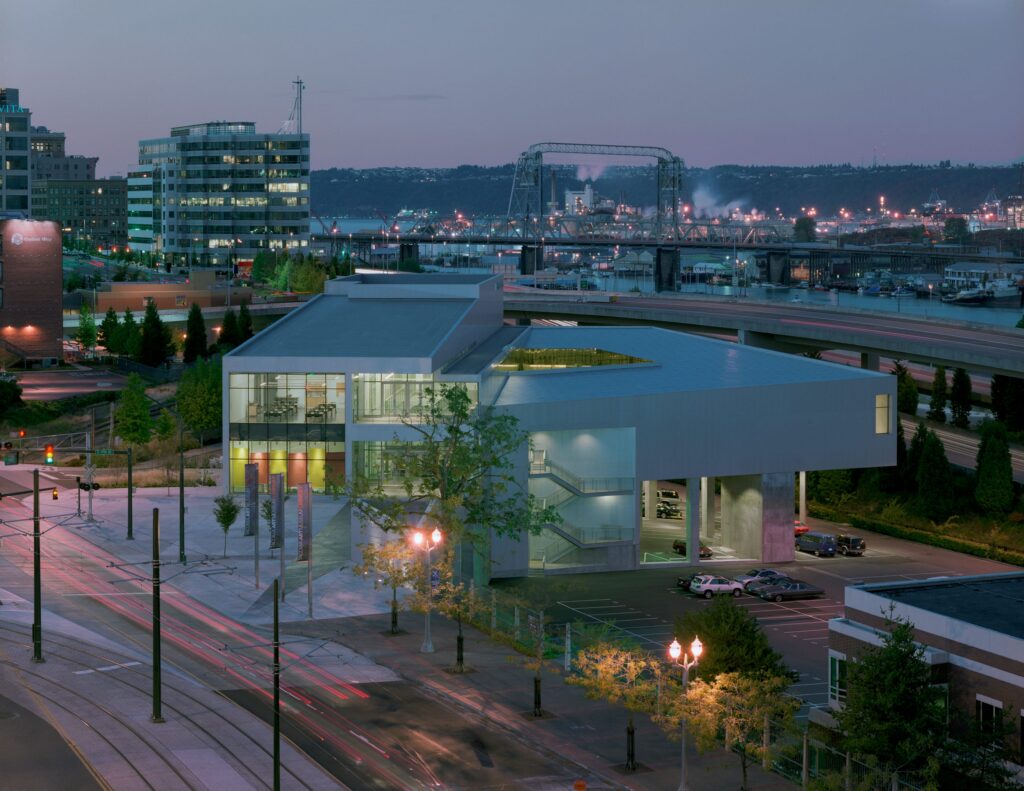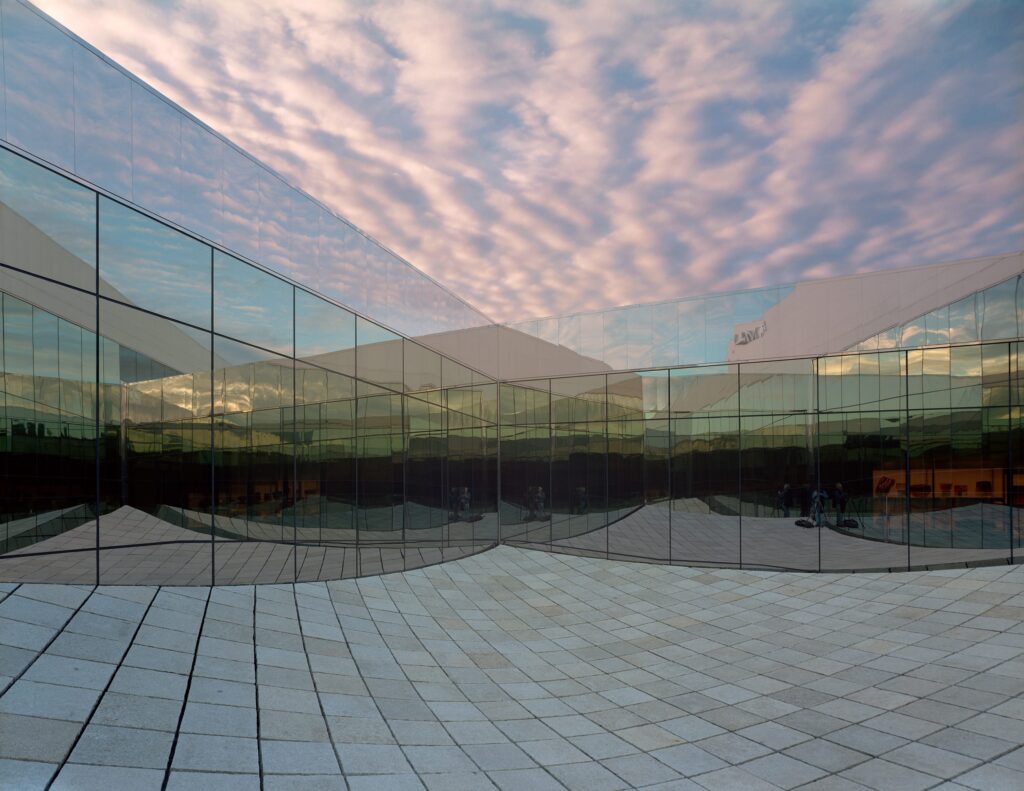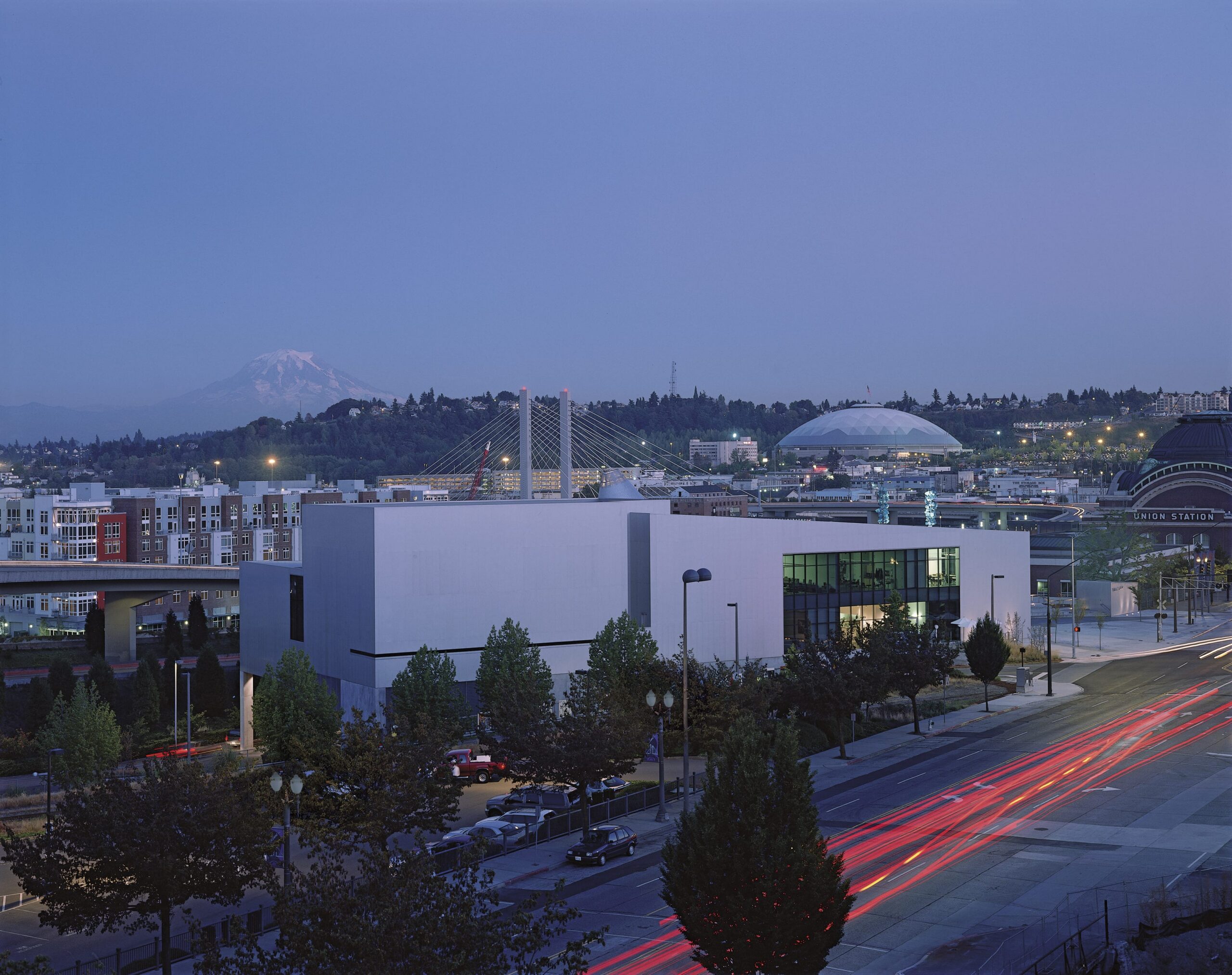
The Tacoma Art Museum’s subdued palette of grays and taut skin of diffusely textured stainless steel, mimics subtle atmospheric changes seen through the fog. Melting into the Pacific Northwest’s sky, the façade absorbs and maximizes available light and color. The drama of the TAM is all about the interior gallery experience.
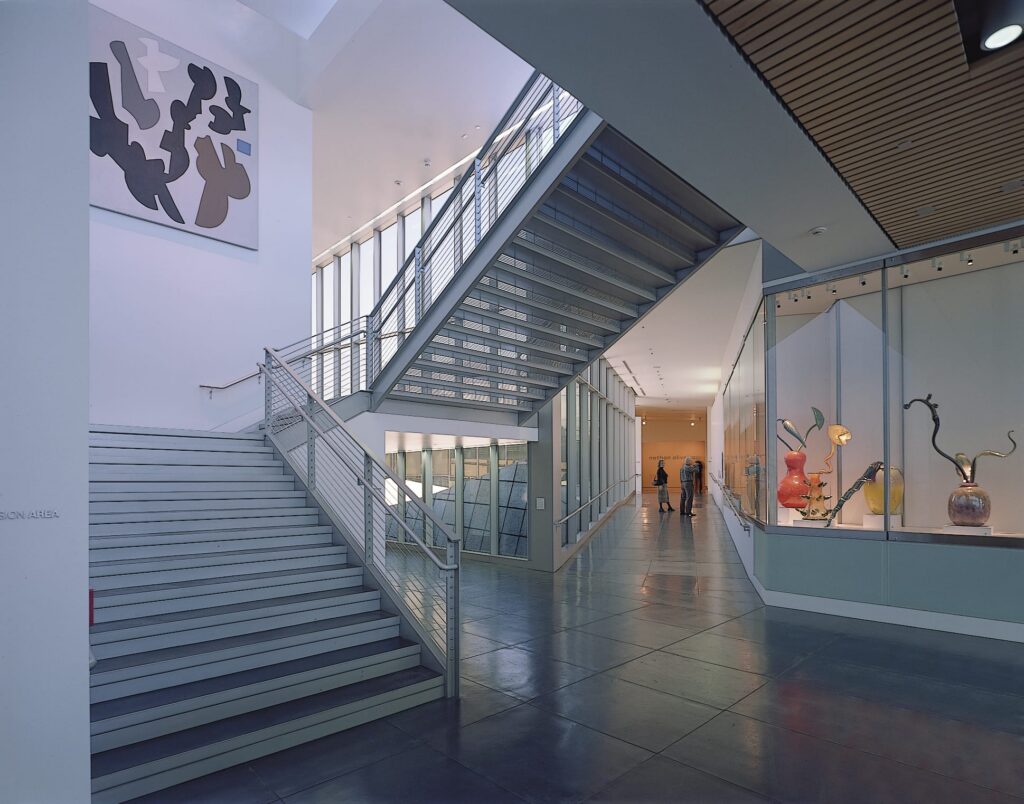
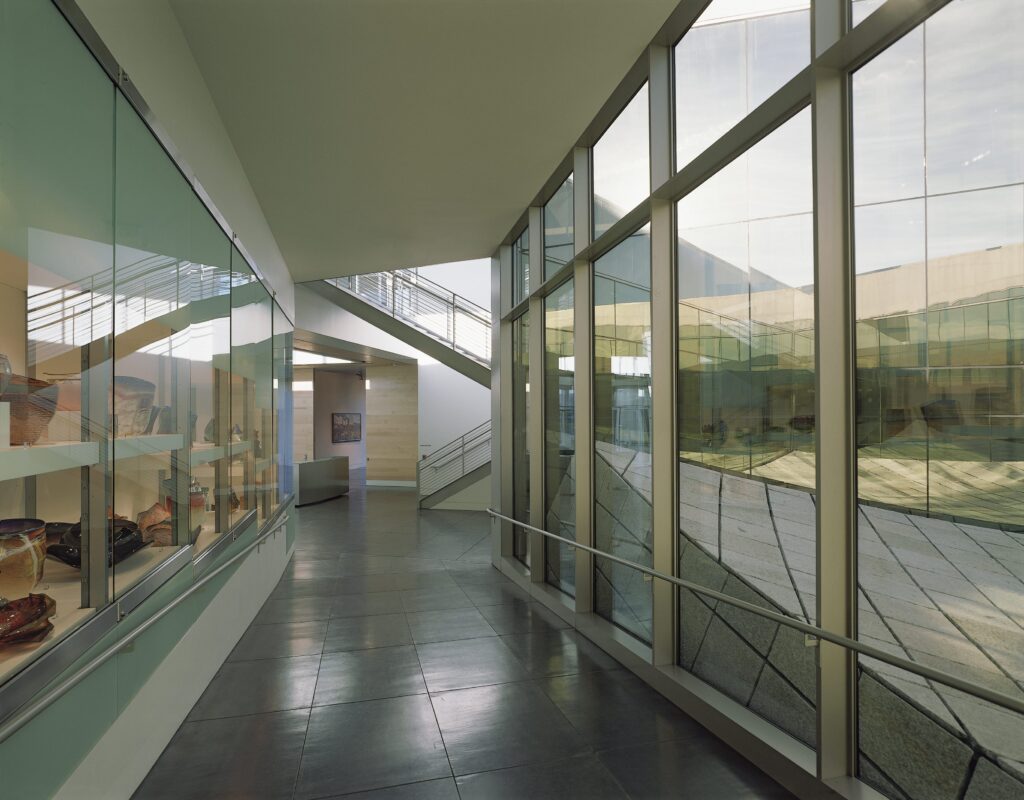
The museum reveals itself slowly, through a spiraling ascent that guides the viewer through a series of (12,00 square feet of) gallery spaces. The largest of these houses Dale Chihuly’s site-specific ode to his hometown, Mille Fiore. The spiritual centre of the building is the moss garden, surrounded by reflective glass and filled by Richard Rhodes’ paraboloid sculpture made from Ancient Chinese granite roadways.
A connection to the outside world of industrialized Tacoma on the North side and historic Tacoma on the South, is achieved through a variety of apertures. Some large rectangular pivots that can be opened or closed according to exhibit requirements, others are thin horizontal strips of glazing that skirt floors to reveal the movement of street life; one veiled by a screen offers pixelated images of cars and pedestrian traffic. This framing effect results in a profound stimulation of the visual sense that lasts long after one leaves the building.
The processional museum experience culminates in a spectacular top floor view of Tacoma, that embraces Tahoma (Mount Rainier), the Tacoma Dome and the Museum of Glass. Feeling not unlike a mountain climber’s refuge, the space offers public, educational and teaching areas that accomplish the museum’s intent of marrying art and community, as well as a meditative perch from which to contemplate the growth of Tacoma from industrial harbor town to cultural capital.