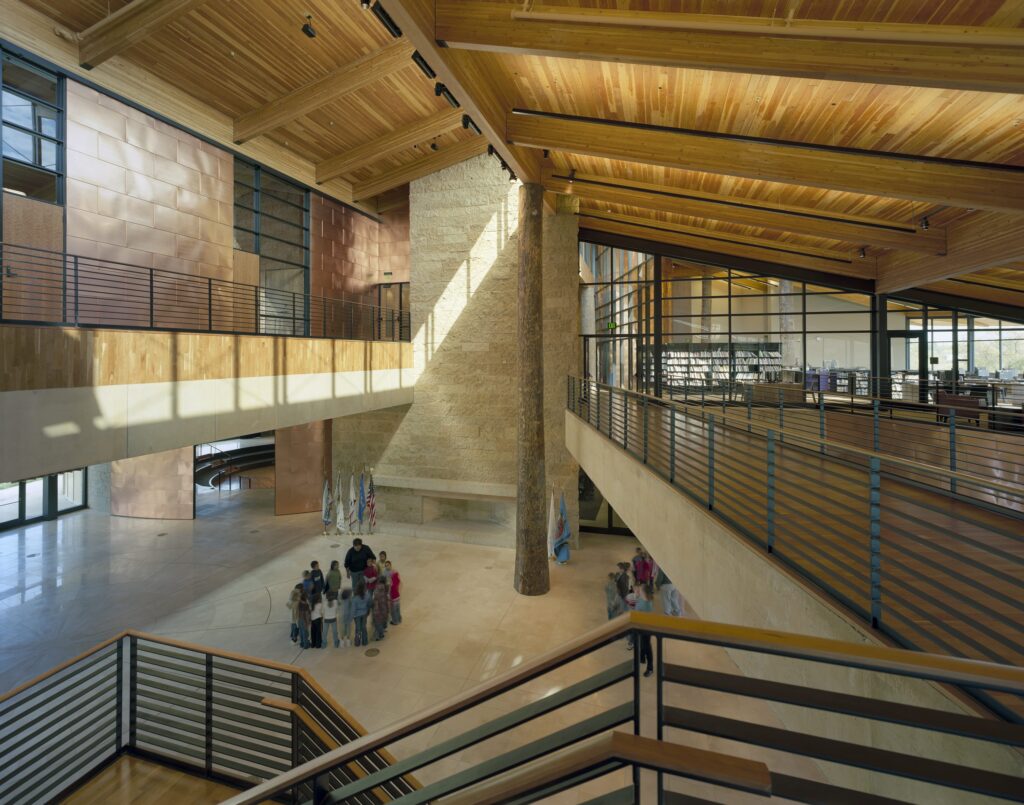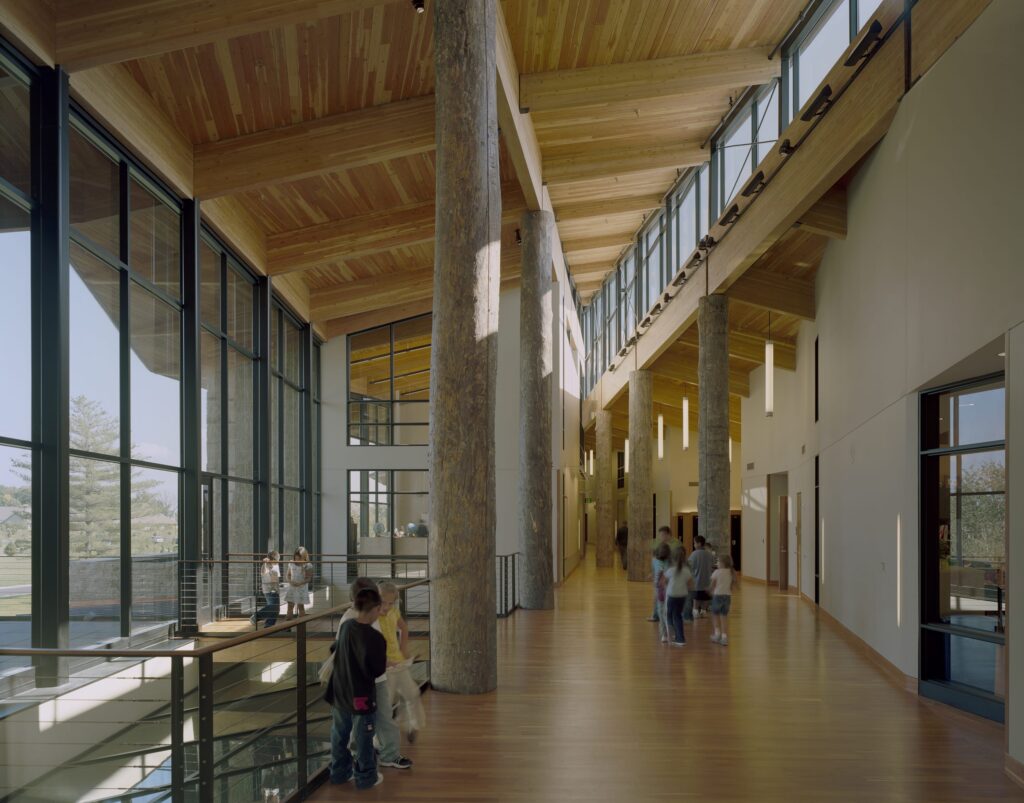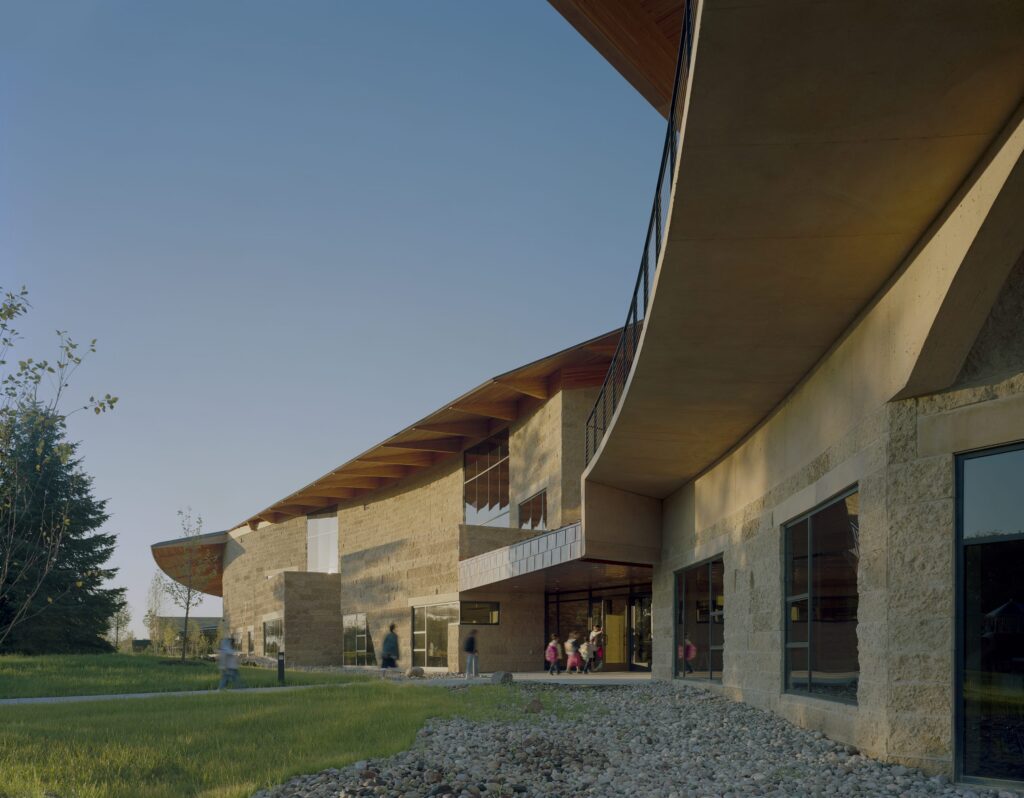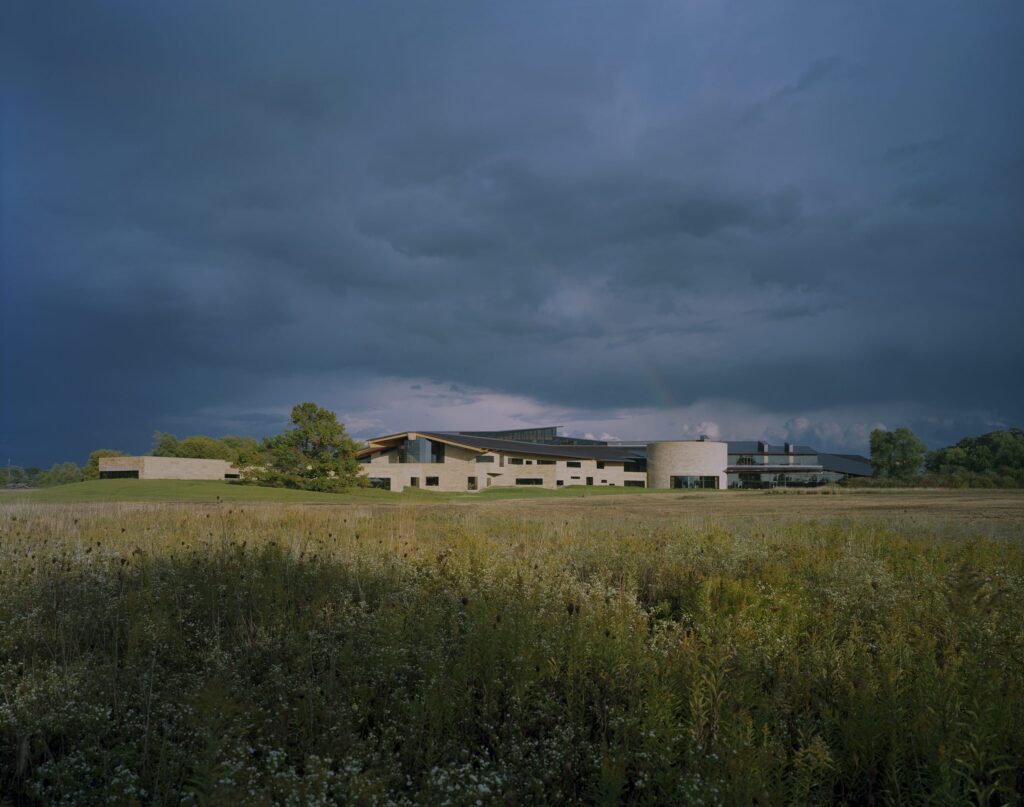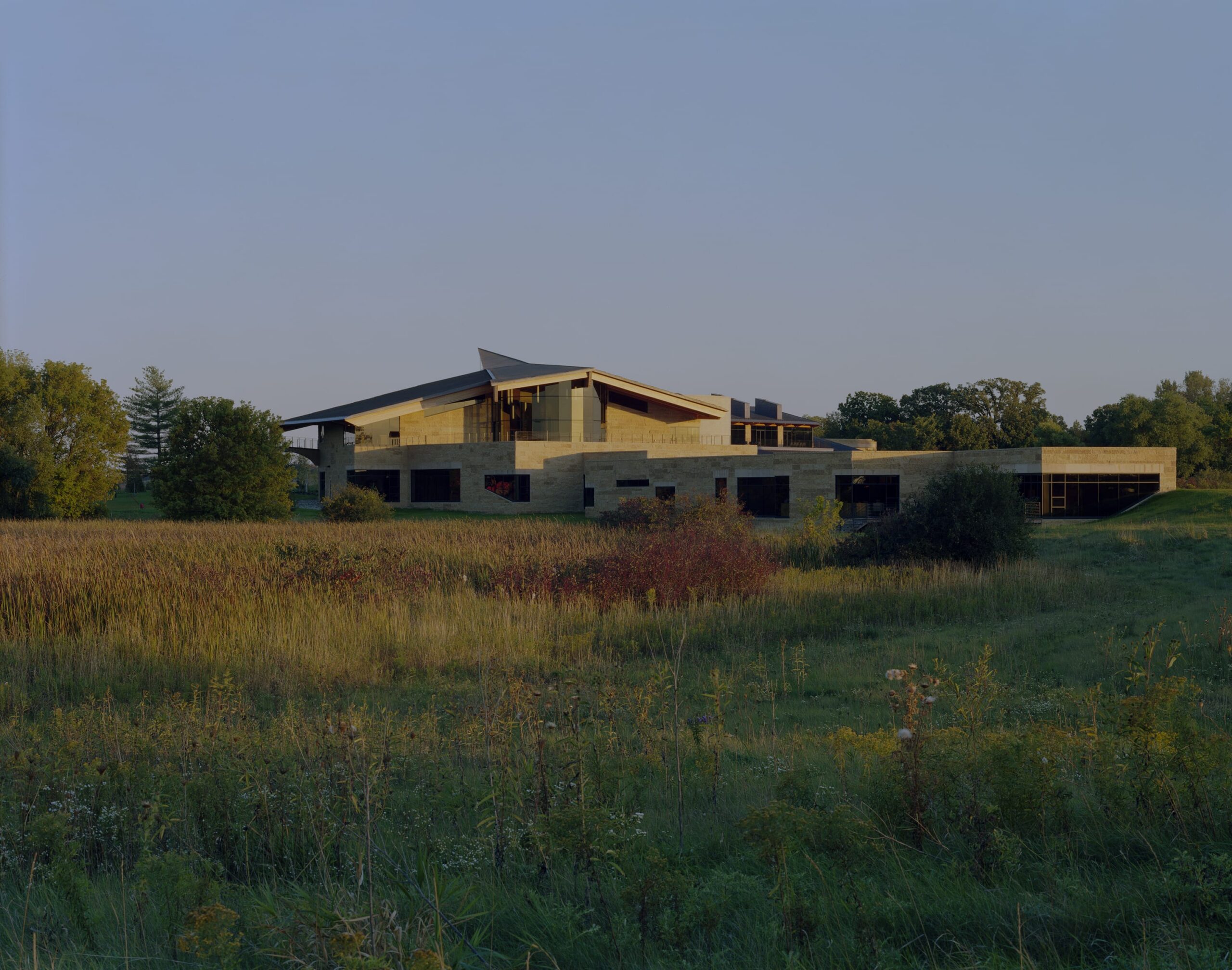
The Indian Community School campus was shaped by land, movement, culture and pedagogy. The school grew from the advocacy of three Oneida mothers who began homeschooling out of concern for their children’s safety and in response to what they believed was an inadequate public school education for Native children, particularly the lack of Native language and cultural learning opportunities. What began as a small, grassroots effort evolved into a community-organized school housed in an abandoned Coast Guard station on the shores of Lake Michigan, and later expanded into several campuses across Milwaukee. After decades of operation, the School secured a nearly 200-acre site of wetlands, prairie, and remnant forest – land honoring their original tribal homelands – on which to build a permanent campus. The 165,000 square foot building traces a natural ridge through the trees and topography. Long-lasting, low maintenance materials – including copper, concrete, heavy timber and limestone – reflect the school’s aspiration of timelessness and permanence in its forever home.
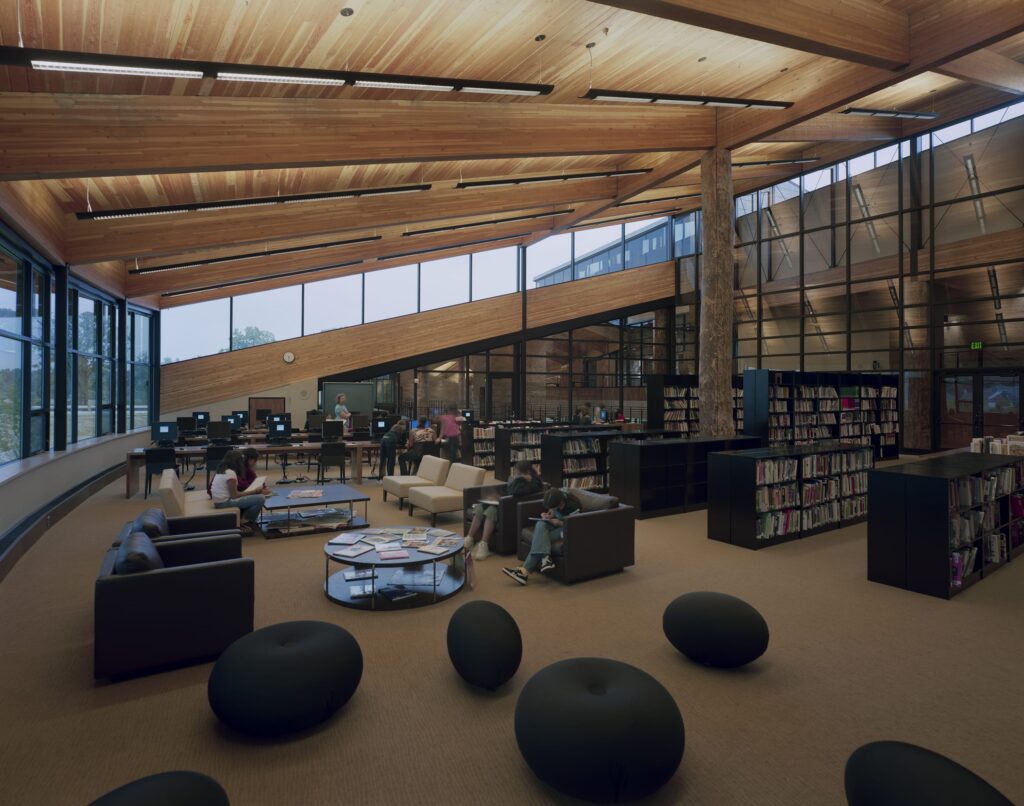
Movement and physical fitness are integral to the educational program. Students walk from the gym to distant fields, traverse long ramps, and cross glazed bridges toward the wetlands folding exercise, landscape and cultural practices into their daily experience. The School’s central entry opens into a “living room,” a great hall where students gather for breakfast and lunch, anchored by fireplaces and framed by sweeping views across the restored prairie to the west. This hall opens to a circular “drum” assembly space. As they grow, they move from early-childhood classrooms near the heart of the building to a progression of classrooms extending toward the wetlands along the campus’s northern edge, and then ascend the earth-to-sky stair to the middle school classrooms on the second level. Each classroom is shaped to capture a distinct view – toward a tree, the forest, the wetland, or the restored prairie.